
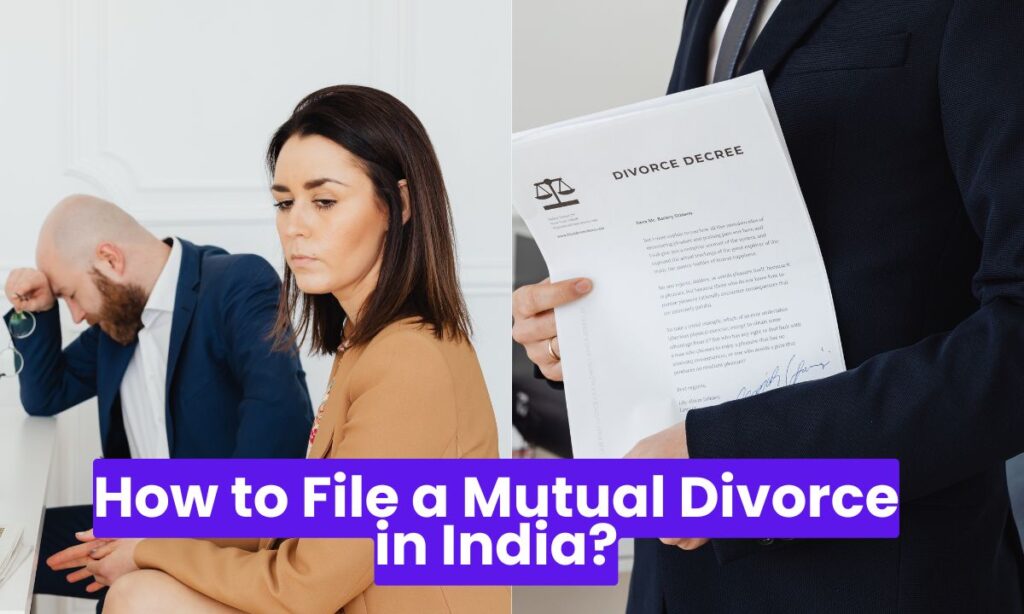
Mutual Divorce: Divorce is a difficult decision, but sometimes it becomes the healthiest way forward. In India, when both husband and wife mutually agree to end their marriage, they can opt for a mutual consent divorce.
Unlike a contested divorce, mutual divorce is faster, less expensive, and emotionally less draining. Let’s understand how the process works, how long it takes, and what it costs.
Legal Provisions for Mutual Divorce
1. Hindu Marriage Act, 1955 – Section 13B
Applicable to Hindus, Buddhists, Jains, and Sikhs. This section allows both parties to dissolve the marriage mutually after living separately for at least one year.
2. Special Marriage Act, 1954 – Section 28
Applicable to inter-religious or civil marriages registered under this Act.
3. Other Personal Laws
- Indian Divorce Act, 1869 – for Christians
- Dissolution of Muslim Marriage Act, 1939 – for Muslims
Each religion has its own laws governing mutual consent divorce.
Essential Conditions for Mutual Divorce
To file a valid mutual divorce in India, these conditions must be fulfilled:
- Minimum one year of marriage must have passed.
- Both spouses must agree mutually to the separation.
- They must have lived separately for at least one year.
- There should be no coercion, fraud, or undue pressure.
- Both must settle issues of alimony, child custody, and property beforehand.
Step-by-Step Process of Filing Mutual Divorce in India
Step 1: Consultation with a Divorce Lawyer
The couple should consult a family lawyer to understand rights, documentation, and settlement details.
Step 2: Drafting and Filing the First Motion Petition
A joint petition is filed in the family court under Section 13B(1), stating that both parties want a divorce and have settled all issues.
Step 3: First Motion Hearing
Both spouses must appear in court. The judge records their statements to confirm the voluntary nature of the decision.
Step 4: Cooling-Off Period (6 Months)
The court grants six months for reconciliation efforts before finalizing the divorce. This is known as the cooling-off period.
Step 5: Filing the Second Motion
After six months (and within 18 months), both parties must appear again to confirm they still want a divorce.
Step 6: Final Decree of Divorce
If the judge is satisfied, the court passes a decree of divorce, legally ending the marriage.
Documents Required for Mutual Divorce
- Marriage certificate or wedding photos
- Proof of residence (Aadhaar, passport, etc.)
- Evidence of separation (letters, affidavits, etc.)
- Details of settlement on alimony, maintenance, and child custody
- Joint passport-size photographs
Timeline for Mutual Divorce in India
- Minimum duration: 6 months (if cooling-off period is waived)
- Average duration: 6 to 18 months depending on court schedule and cooperation between spouses.
Cost of Filing Mutual Divorce
The cost varies depending on the city and lawyer, but generally:
- Court fee: ₹500–₹1,000
- Lawyer’s fee: ₹15,000 to ₹50,000 (can vary based on complexity)
- Documentation: ₹2,000–₹5,000
Thus, the average total cost ranges from ₹20,000 to ₹60,000 in most cases.
Cooling-Off Period: Can It Be Waived?
Yes. The Supreme Court in Amardeep Singh v. Harveen Kaur (2017) held that the six-month waiting period can be waived if:
- The couple has been living separately for more than one year.
- Reconciliation attempts have failed.
- Both parties genuinely wish to part ways.
In such cases, the court can grant divorce in less than six months.
Key Benefits of Mutual Divorce
- Quick resolution – No prolonged litigation
- Cost-effective – Shared legal expenses
- Less emotional stress – Cooperative and peaceful
- Privacy protection – Less courtroom exposure
Common Mistakes to Avoid
- Leaving custody or maintenance unresolved
- Signing petitions without understanding the terms
- Filing prematurely (before completing one year of marriage)
- Not appearing for the second motion (leading to dismissal)
Rights of Spouses After Mutual Divorce
After divorce:
- Both parties are free to remarry.
- The wife may receive alimony or maintenance if agreed.
- Custody and visitation rights of children remain enforceable under court order.
Role of Family Courts in Mutual Divorce
Family courts ensure:
- Consent of both parties is voluntary and informed.
- There is no coercion or fraud.
- All settlements are fair and reasonable.
If satisfied, the court grants a decree of divorce.
Mutual Divorce for NRIs
NRIs married under Indian laws can file for divorce:
- Either in India or in the country of residence.
- POA (Power of Attorney) may be given to an advocate or relative.
- The foreign decree must be recognized by Indian courts if compliant with Indian law.
Conclusion
A mutual divorce is the most peaceful and efficient way to legally end a marriage in India. With clear communication, proper documentation, and legal guidance, the process can be completed smoothly within months.
It’s not about breaking ties — it’s about choosing peace and closure.
FAQs
1. Can mutual divorce be filed before completing one year of marriage?
No. As per law, the couple must complete at least one year of marriage before filing.
2. Is personal appearance necessary for both motions?
Yes, both parties must appear unless exempted by the court due to genuine reasons.
3. Can one spouse withdraw consent after the first motion?
Yes, but it must be done before the second motion is filed.
4. What happens if one party doesn’t appear for the second motion?
The petition may be dismissed, and the process must restart.
5. Can the six-month cooling period be waived?
Yes, courts can waive it under certain conditions as per Amardeep Singh v. Harveen Kaur (2017).